


olive rock - @wildcalabriaexperience
Introduction
The Scoglio dell'Ulivo in Palmi is no longer "just" one of the most beloved and photographed symbols of the Costa Viola. It has officially become part of Italy's geological heritage.
ISPRA (Higher Institute for Environmental Protection and Research) has officially included it in the National Inventory of Geosites.
But what does this mean? And why this particular rock? It's not just because of the ancient tree that gives it its name. The real secret is hidden inside its rock: a scientific treasure called mylonite.
An Icon of the Costa Viola: The Tree That Endures
Anyone who has been to the Tonnara di Palmi beach knows this view: a rocky islet proudly emerging from the turquoise waters, topped by an ancient wild olive tree (Olea europaea var. sylvestris).
This tree is a true monument to resilience. Clinging to the rock for centuries, it withstands wind, salt, and storms. Its tenacity in thriving in such a hostile environment is part of its charm, much like the proverb says: its beauty also comes from this long and tenacious "struggle" with the elements.
It is this iconic image, a symbol of untamed nature, that has made the rock famous all over the world. But now we know that its importance goes far beyond the landscape.
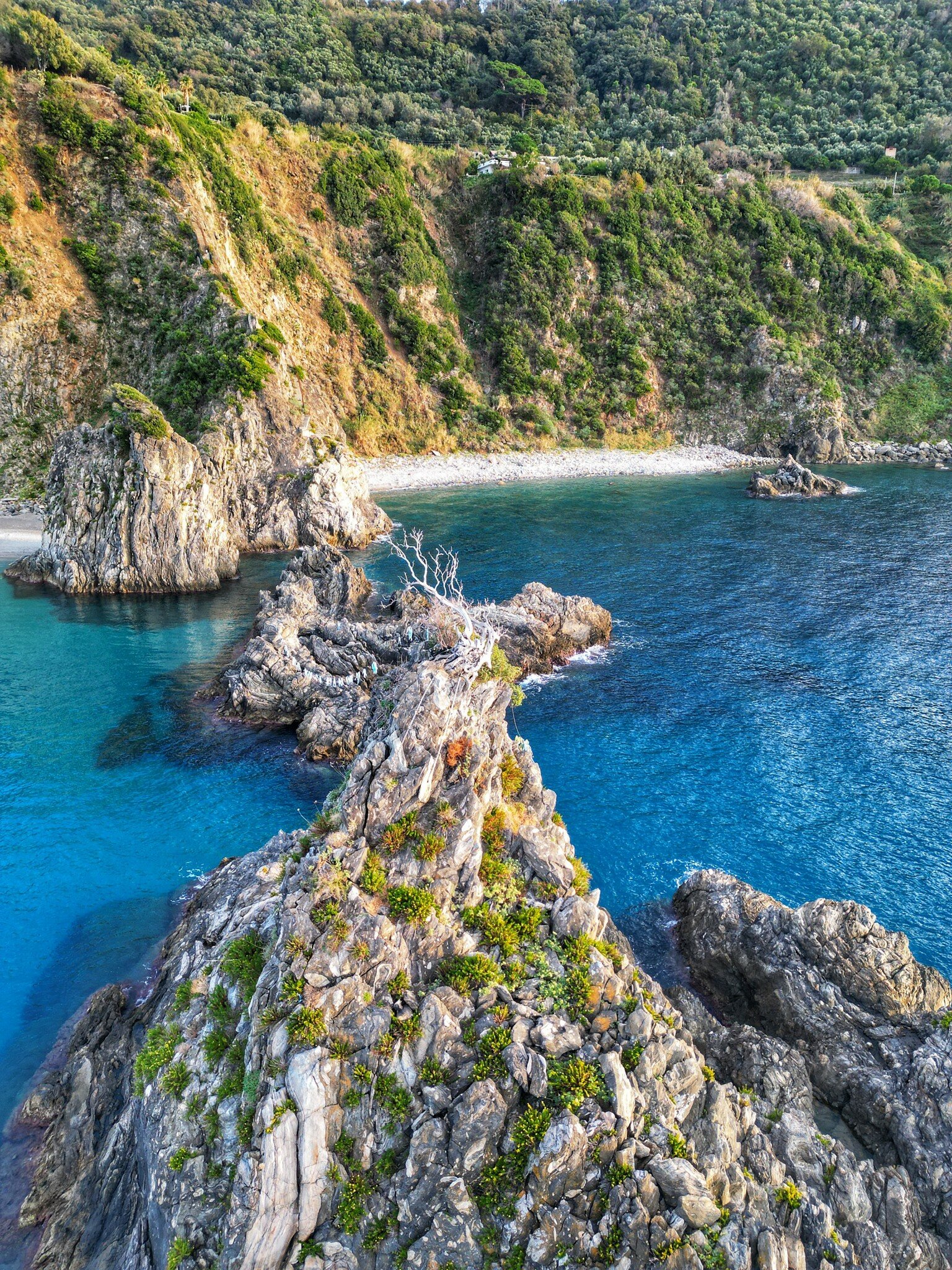
Ulivo Rock ph Carmelo Ranieri
The News: The Olive Tree Rock is a National Geosite
Being an "ISPRA Geosite" means that the Ulivo Rock has been recognized as a place of very high scientific, naturalistic, and landscape value at the national level.
It's like entering the "Hall of Fame" of Italian geological sites.
This recognition did not come by chance. It is the result of a long process of study and commitment, carried out by the Tourism Department of the Municipality of Palmi in close collaboration with the University of Catania. It was their researchers who unveiled the secret hidden in the rocks.
The Secret in the Rocks: What are Mylonites?
Here lies the heart of the discovery, the scientific reason that led to the recognition. The Scoglio dell'Ulivo is made up of extremely rare rocks called mylonites.
What are mylonites:
"Scars" of the Earth: They are not common rocks. Imagine them as the "scars" left by an immense movement of the Earth's crust.
Formed in Depth: They were created more than 15 kilometers below the surface, under conditions of extreme pressure and heat.
A Geological "Railway": Geologists from the University of Catania (in a study published in the journal Journal of Structural Geology) described them as a "railway." This railway acted as a sliding zone between two enormous continental blocks: the Serre to the North and the Aspromonte to the South.
Why are they so important?
These rocks are a history book. They tell us what happened in the Mediterranean over the last 60 million years. By studying the mylonites of the Scoglio dell'Ulivo, geologists can reconstruct the tectonic movements that shaped Calabria and the entire western Mediterranean, long before the Tyrrhenian Sea opened.
In practice, that small rock is one of the key pieces of evidence for understanding how the geography we see today was born.
What Does This Recognition Mean for Palmi and Tourism?
This inclusion in the ISPRA inventory opens up extremely important scenarios for Palmi and the entire Costa Viola.
Protection: First of all, it ensures that this unique heritage is protected and preserved.
Geotourism: It transforms the rock from a simple bathing attraction to a geotourism destination. Visitors will come not only to swim, but to discover a fascinating geological history.
Enhancement: It fits perfectly into the context of the Aspromonte UNESCO Geopark, creating a world-class scientific and naturalistic itinerary.
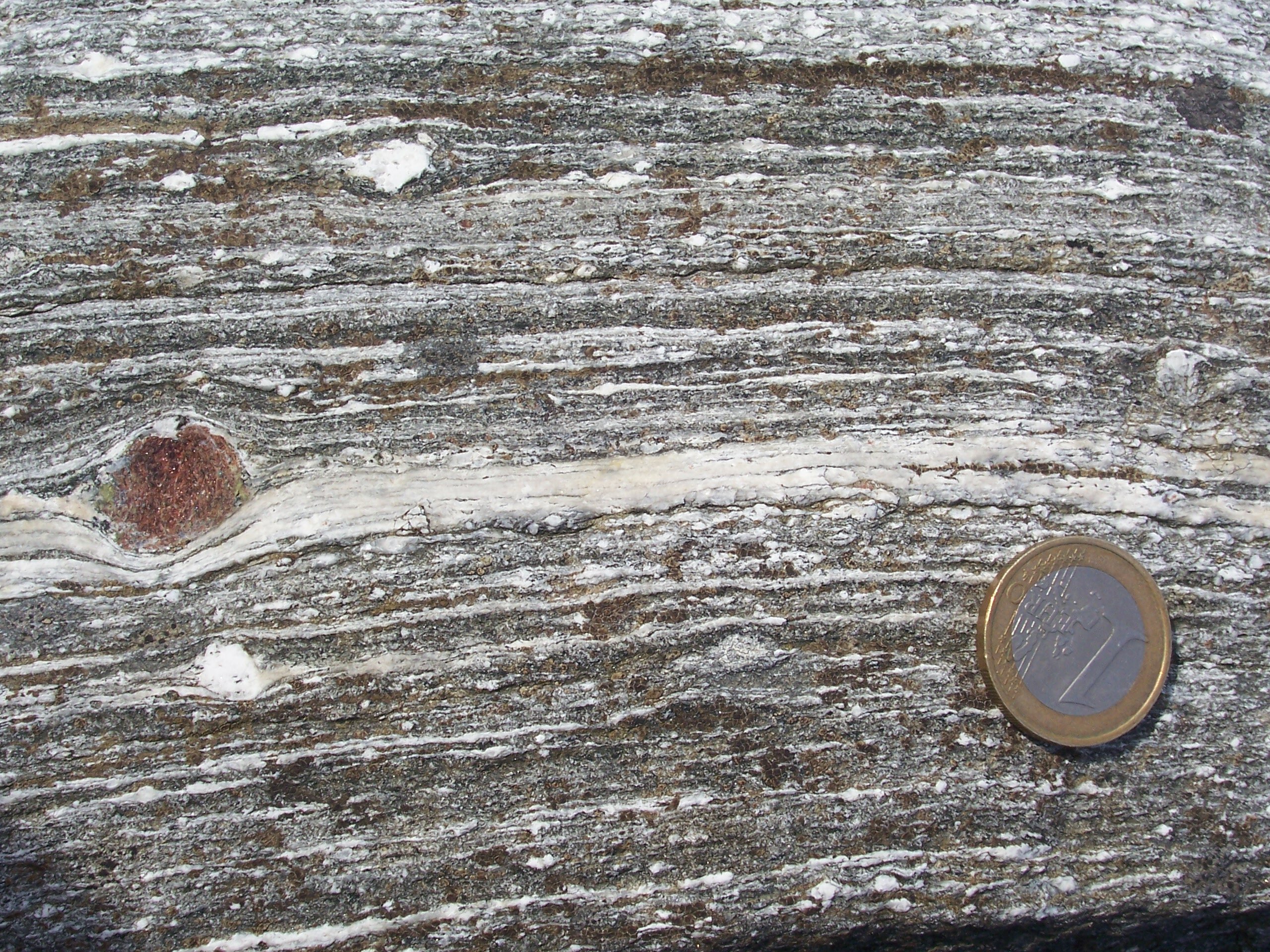
Themylonite is a metamorphic rock that is found mainly along a shear zone of the Earth's crust.
The shear zone, or fault zone, is a band that separates two volumes of lithosphere in which there is an accumulation of deformation; this deformed band, therefore, allows the relative movements of the rock volumes. On the surface, the shear zone can continue with faults, in which there is a loss of cohesion due to the rigidity of the rock material (cataclasites are formed, crushed non-metamorphic rocks), while in the shear zone (which occurs at 10 - 15 km depth, below the 250 - 300 °C isotherm) the deformation occurs ductilely, creating particularly foliated, cohesive rocks, namely the mylonites.
source: CC BY-SA 1.0, https://commons.wikimedia.org/w/index.php?curid=1020073
How to Visit the Olive Rock
Do you want to see this national treasure up close? It's very simple.
From the Beach: The Scoglio is located right in front of the magnificent Tonnara di Palmi beach. You can admire it in all its beauty by strolling along the promenade or relaxing on the beach.
By Sea: For a closer experience, you can rent a pedal boat, a kayak, or join a boat tour to go around it and appreciate the details of its rocks and the shades of the crystal-clear water that surrounds it.
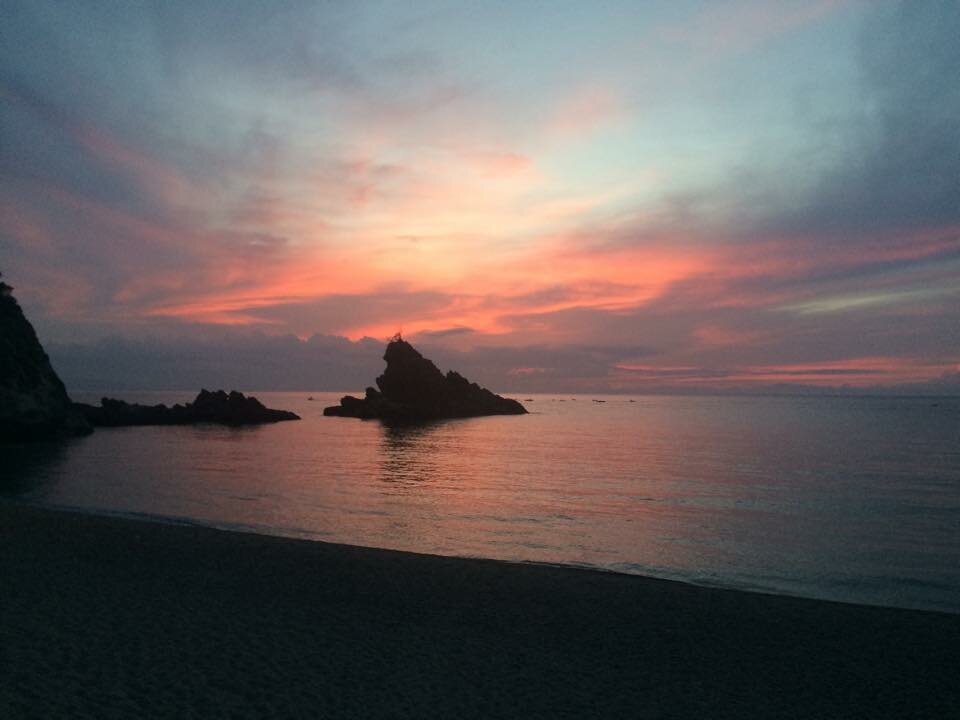
Scoglio dell'Ulivo ph Tony Magazzù
A Heritage to Celebrate and Protect
The recognition of the Scoglio dell'Ulivo as a National Geosite by ISPRA is a victory for Palmi and for science.
It reminds us that the beauty we admire on the surface is often the result of incredible forces and deep geological histories. What is a landscape symbol for us is, for the Earth, a fundamental page of its diary, written 60 million years ago.
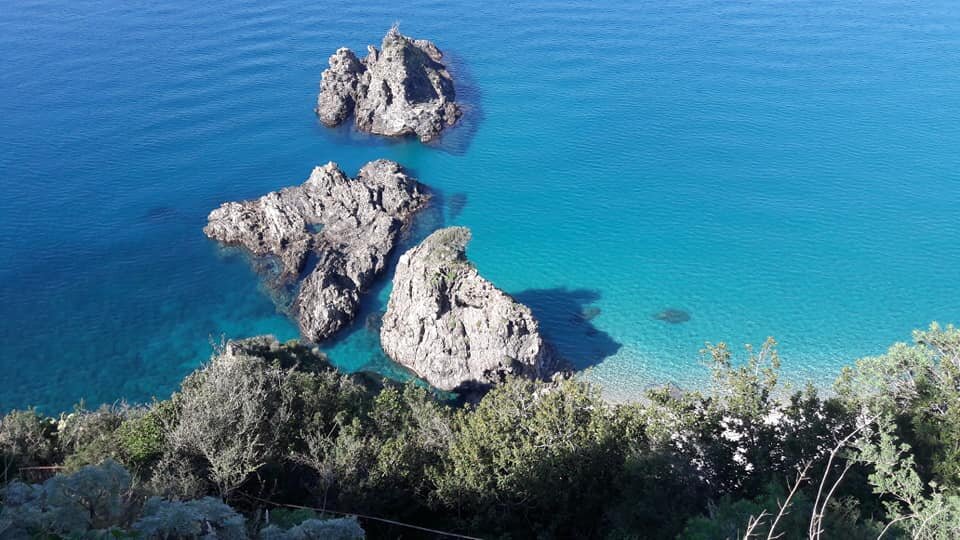
Scoglio dell'Ulivo ph Tony Magazzù


